
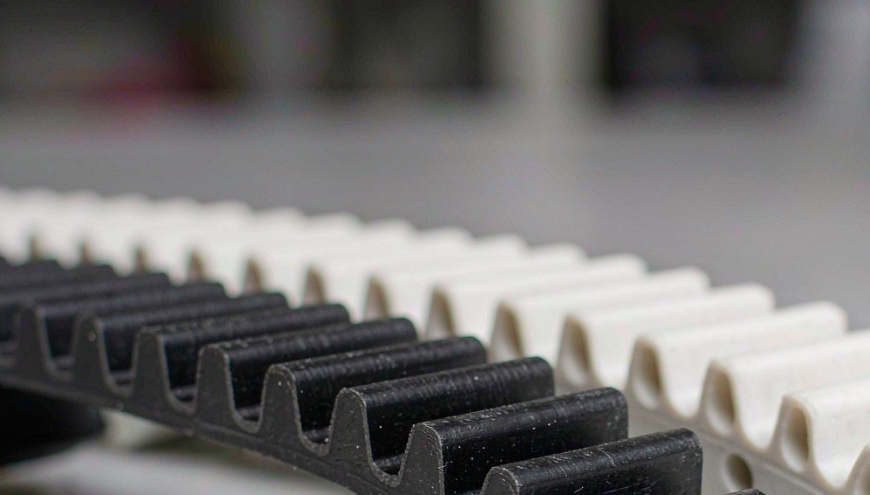
Pick the wrong timing belt and you won't notice for months. Then it lets go on a packaging line at 2 a.m. and the whole shift stops. The rubber-versus-polyurethane debate sounds like a materials footnote, but it decides whether your drive runs quiet for years or starts dropping debris into a clean room. This is the plain version of how the two compare, where each one earns its keep, and how to stop guessing.
First, what "rubber" and "PU" actually are
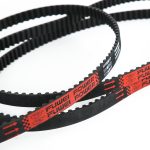
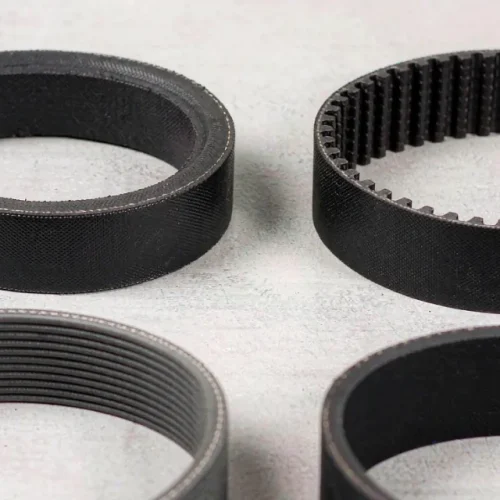
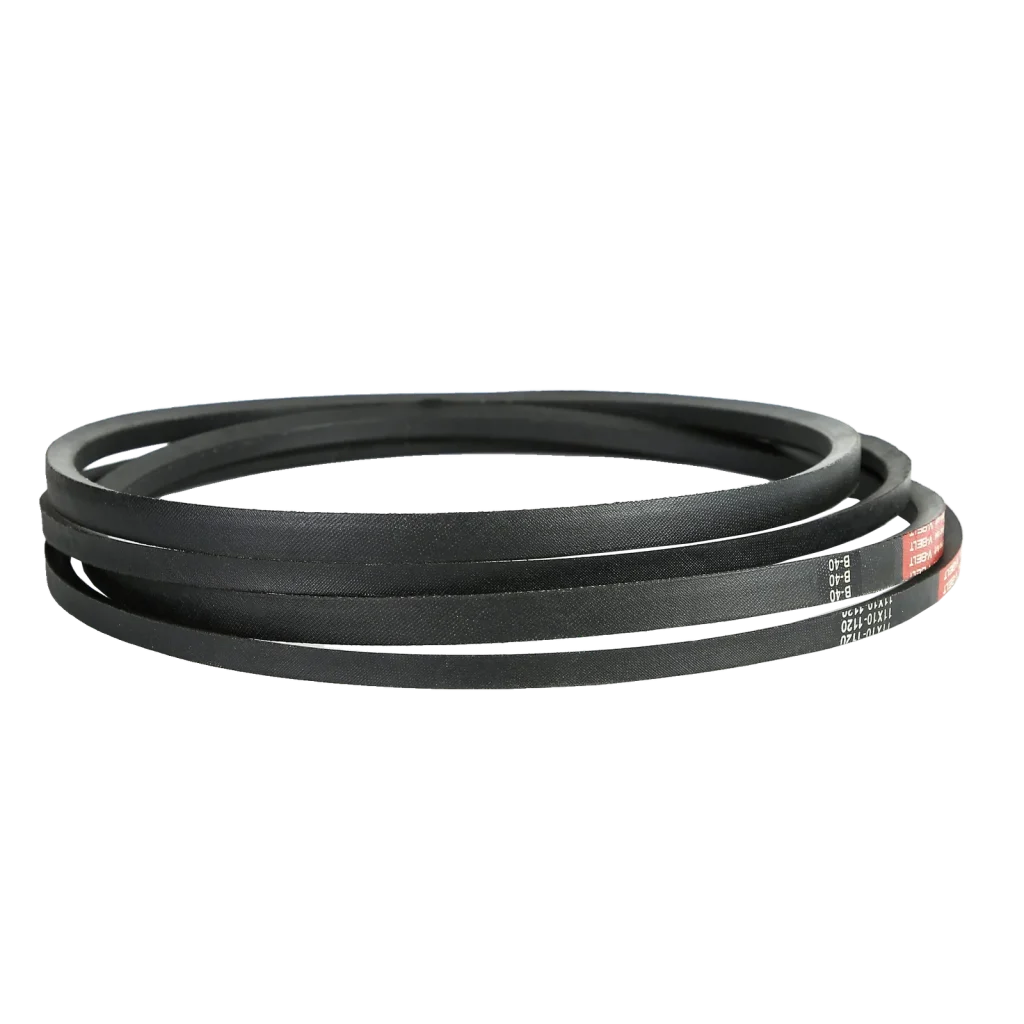
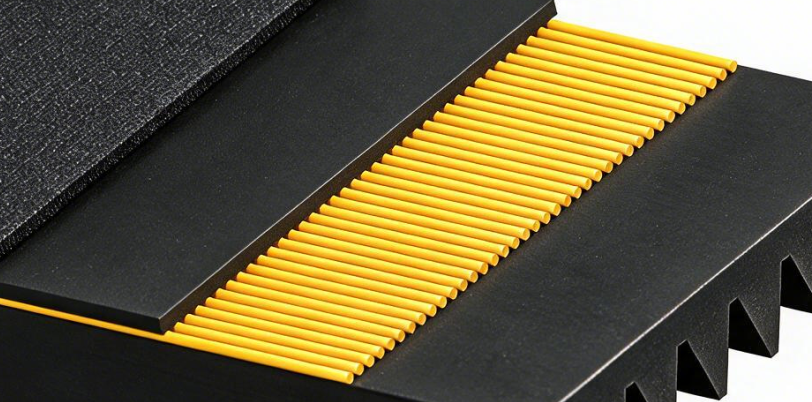
Most people hear "rubber belt" and picture a tire. Industrial timing belts are more specific. The "rubber" kind has an elastomer body — usually neoprene (CR) for everyday use, or HNBR when it has to survive under a hot engine hood. Running through that body are tension cords: fiberglass is the default, aramid (the Kevlar-type stuff) when you need more muscle, occasionally steel.
The "PU" kind is thermoplastic polyurethane (TPU) — a plastic rather than a true rubber. Its cords are almost always steel, sometimes aramid, and in food-grade builds stainless. Same job, different chemistry. That chemistry is the whole story.
How they actually behave on the machine
Rubber is the forgiving one. It bends easily, soaks up vibration, and stays quiet. Hit it with a shock load or let the pulleys drift out of alignment and it shrugs it off better than PU ever will. The trade-off is that it stretches a little more over time and, being softer, wears faster and can shed fine black dust.
PU is the rigid, precise one. It barely stretches, holds its shape, and shrugs off oil, most chemicals, and abrasion. In standardized wear tests it outlasts rubber by several times — you'll see "5–8×" quoted, and that's real in a lab, though your mileage depends on the duty. The catch: it's stiff, it doesn't like being slammed, and it goes brittle in the cold. Drop a PU belt into a freezing warehouse or a high-shock drive and it can crack where rubber would just flex.
Temperature — the spec people misread
This is where the old advice gets sloppy. Standard neoprene rubber belts run roughly −30°C to +90°C. Step up to HNBR and you get about −40°C to +150°C, which is why it shows up in cars. PU sits in a narrower band, typically −20°C to +80°C. Special compounds push those edges, but the weaknesses stay: PU hates the cold, rubber (except HNBR) hates the heat. If your environment swings hard in either direction, the material choice is half made for you.
Service life — read the number, then ignore it
You'll find "18,000 hours" for rubber and "30,000 hours" for PU tossed around. Those are best-case numbers from gentle duty, not promises. A rubber belt on a clean, aligned, moderate-speed drive can genuinely approach that. The same belt abused with misalignment and overload might not see a tenth of it. PU's longer headline life holds up best in light, precise, clean work — exactly where rubber tends to wear out from dust and stretch. So: treat the hours as a hint about the material, not a warranty on your machine.
Rubber vs PU, side by side
| Property | Rubber (neoprene / HNBR) | PU (thermoplastic polyurethane) |
| Belt body | Neoprene (CR); HNBR for heat | Thermoplastic polyurethane (TPU) |
| Tension cord | Fiberglass (std), aramid, steel | Steel (std), aramid, stainless (food) |
| Flexibility & shock | Excellent — forgives misalignment | Poor — can crack under impact |
| Stretch / stability | Moderate stretch | Very low stretch, very stable |
| Wear & abrasion | Good; softer, wears faster | Excellent (often cited 5–8× vs rubber) |
| Oil & chemical | Moderate | Very good |
| Cleanliness | Can shed fine dust | Dust-free, cleanroom-friendly |
| Typical temp range | −30 to +90°C (HNBR −40 to +150°C) | −20 to +80°C |
| Field repair | Usually full replacement | Can be hot-plate welded on site |
| Typical best-case life | ~10,000–18,000 h | ~20,000–30,000 h (light duty) |
| Cost | Lower | Higher |
Where each one actually belongs
Rubber earns its place in: automotive auxiliary drives, textile and paper machinery, woodworking, big high-speed lines, and anywhere shock loads or sloppy alignment are part of life. It's also the cheaper default when the duty isn't exotic.
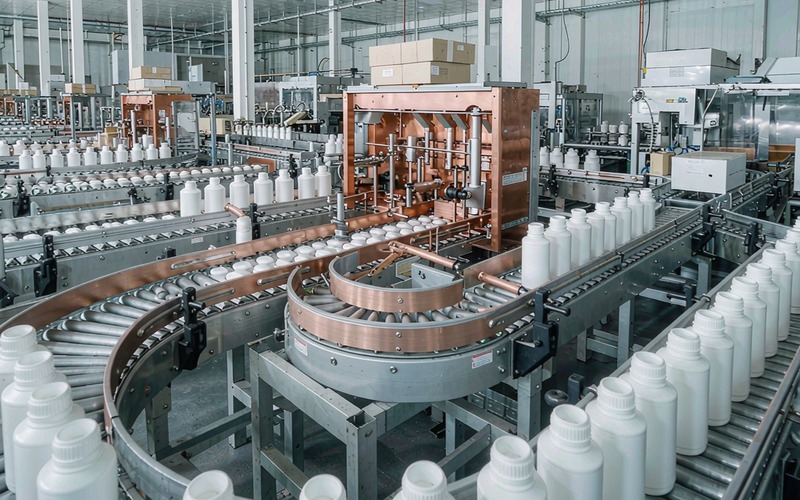
PU owns the clean and precise world: food and beverage lines, pharma and medical equipment, electronics assembly, packaging, parcel sorting, 3D printers, and linear-positioning systems where a fraction of a millimeter matters. No dust, stable dimensions, and you can even weld a PU belt back together on site instead of shipping the whole thing out.
Four questions that decide it
- Does the belt touch food or sit in a clean room? → PU, almost always.
- Are shock loads, jams, or misalignment common? → Rubber, it forgives more.
- Do you need rock-steady positioning with almost no stretch? → PU.
- Are you running hot or cold? → HNBR rubber for heat; neither loves deep cold, but PU fails it worst.
Questions buyers actually ask
Can PU just replace rubber everywhere? No. In cold, high-shock, or badly aligned drives, PU cracks while rubber keeps going. Match the duty.
Is PU really longer-lived? In light, clean, precise duty, yes — often by a wide margin. Under shock or freezing temps, rubber can outlast it.
Are rubber belts banned in food plants? Not banned, but PU is strongly preferred: it's available in food-grade compounds, sheds nothing, and tolerates washdown chemicals.
Can you repair a broken belt on site? PU belts can be welded with a hot-plate kit in minutes. Rubber belts are vulcanized at the factory, so a break usually means a full replacement.
How do I read a temperature spec without getting burned? Check the continuous range, not the peak. A belt rated "up to 110°C peak" may only be happy at 90°C all day.
Need a specific belt spec'd for your machine? Talk to our engineers at Contact Us, or browse the full range in Timing Belts. See also our 2026 transmission belt trends.